Smart Concrete Project Planning as Temperatures Rise in Springfield, MO
Smart Concrete Project Planning as Temperatures Rise in Springfield, MO
A Commercial Construction Guide from Meyer Construction
As temperatures begin to climb in Springfield, Missouri, commercial construction activity accelerates. Warmer weather creates a prime window for site work, foundations, flatwork, and structural concrete pours. For developers, general contractors, and commercial property owners, spring and summer are often the busiest—and most critical—seasons for concrete work.
However, rising temperatures also introduce unique challenges that can significantly impact quality, timelines, safety, and long-term durability.
At Meyer Construction in Springfield, MO, we specialize in commercial concrete projects and understand the specific planning considerations required for successful pours during warmer months. Whether you're preparing for a large slab-on-grade, warehouse foundation, parking lot, or structural commercial build, this guide will help you navigate project planning as temperatures rise.
Why Warm Weather Concrete Planning Matters
Concrete is highly sensitive to environmental conditions—especially temperature, humidity, and wind. While warmer weather eliminates the freezing risks associated with winter pours, it introduces new concerns that can compromise structural integrity if not managed properly.
High temperatures can lead to:
- Rapid moisture evaporation
- Accelerated setting times
- Surface cracking
- Reduced long-term strength
- Finishing challenges
- Increased risk of plastic shrinkage cracking
For commercial projects where durability and load-bearing performance are critical, proactive planning is essential.
Understanding How Heat Affects Concrete
Concrete strength depends on a controlled chemical reaction called hydration. This process occurs when cement reacts with water.
When temperatures rise:
- Hydration accelerates.
- Water evaporates more quickly.
- Workability decreases.
- Surface moisture is lost faster than internal moisture.
If not properly managed, this imbalance can result in:
- Weak surface layers
- Surface scaling
- Cracking
- Curling of slabs
- Reduced lifespan
The American Concrete Institute (ACI) defines “hot weather concreting” conditions as:
- High ambient temperatures (typically above 77°F)
- High concrete temperature
- Low relative humidity
- Wind exposure
In Springfield, MO, these conditions frequently occur from late May through early September.
1. Schedule Pours Strategically
One of the most effective ways to combat heat-related issues is scheduling.
Early Morning Pours
Pouring concrete early in the morning allows crews to:
- Work during cooler temperatures
- Reduce evaporation rates
- Maintain better finishing control
- Improve worker safety
Avoiding mid-afternoon peak heat is especially important during July and August in Southwest Missouri.
Avoiding Peak Heat Waves
During extreme heat advisories, project managers may need to adjust schedules entirely to maintain quality standards.
Commercial project planning should build flexibility into timelines for weather adjustments.
2. Manage Concrete Temperature at Placement
Concrete temperature at the time of placement is critical.
Higher concrete temperatures can:
- Shorten setting time
- Increase risk of cracking
- Reduce ultimate strength
Methods to Control Mix Temperature:
- Using chilled water in the mix
- Cooling aggregates before batching
- Minimizing transport time from plant to job site
- Coordinating closely with ready-mix suppliers
Close coordination between contractor and supplier is especially important for large commercial pours where timing precision matters.
3. Plan for Moisture Retention and Curing
Proper curing is arguably the most important factor in ensuring long-term strength and durability.
When moisture evaporates too quickly from the slab surface, shrinkage cracks can form before the concrete fully gains strength.
Effective Curing Strategies Include:
- Applying curing compounds immediately after finishing
- Using wet coverings or curing blankets
- Maintaining moisture for a minimum recommended duration
- Installing wind barriers when necessary
In commercial settings such as warehouses, retail developments, and industrial facilities, curing quality directly impacts floor performance under heavy loads.
4. Account for Wind and Humidity
Springfield’s weather patterns often include dry, windy days—especially in late spring.
Wind increases evaporation rates significantly, even when temperatures are moderate.
Low humidity combined with wind can accelerate surface drying and increase cracking risk.
Project planning should include:
- Windbreak installation when necessary
- Monitoring evaporation rates
- Adjusting finishing timing accordingly
Experienced crews monitor weather data closely during commercial pours.
5. Adjust Mix Design for Summer Conditions
Concrete mix design may require modification during warmer months.
Potential adjustments include:
- Incorporating retarders to slow setting time
- Adjusting water-to-cement ratios
- Using supplementary cementitious materials
- Adding fibers to reduce cracking risk
Commercial projects demand durability and compliance with engineering specifications. Collaboration between structural engineers, contractors, and suppliers ensures proper performance.
6. Plan for Expansion and Contraction
Concrete expands and contracts with temperature fluctuations.
As temperatures rise:
- Slabs expand during the day
- Contraction occurs during cooling
Proper joint placement is critical in commercial projects.
Key Planning Considerations:
- Adequate control joints
- Correct joint spacing
- Timely saw cutting
- Reinforcement placement
Improper joint planning can result in uncontrolled cracking that affects structural integrity and aesthetics.
7. Prepare Subgrade and Base Materials Properly
Warm weather often follows spring rains in Springfield. Saturated subgrade can compromise slab performance.
Before pouring:
- Ensure proper compaction
- Verify moisture levels
- Confirm adequate drainage
- Stabilize soil if necessary
Missouri’s clay-heavy soils expand and contract with moisture variation. Site preparation is critical for commercial load-bearing slabs.
8. Coordinate Inspections and Permits Early
Commercial concrete projects often require:
- Pre-pour inspections
- Reinforcement verification
- Municipal approvals
- Structural engineer sign-offs
As construction activity increases in warmer months, inspection scheduling can become more competitive.
Early coordination prevents unnecessary delays once temperatures are ideal for pouring.
9. Protect Worker Safety During High Heat
Concrete work is labor-intensive and physically demanding.
High temperatures increase risk of:
- Heat exhaustion
- Dehydration
- Reduced focus
- Workplace accidents
Professional project planning includes:
- Hydration stations
- Scheduled cooling breaks
- Adjusted work hours
- Safety monitoring
Maintaining crew health protects both quality and timeline.
10. Plan for Large-Scale Commercial Slabs
In commercial construction, slab quality directly impacts:
- Forklift performance
- Racking systems
- Equipment stability
- Tenant satisfaction
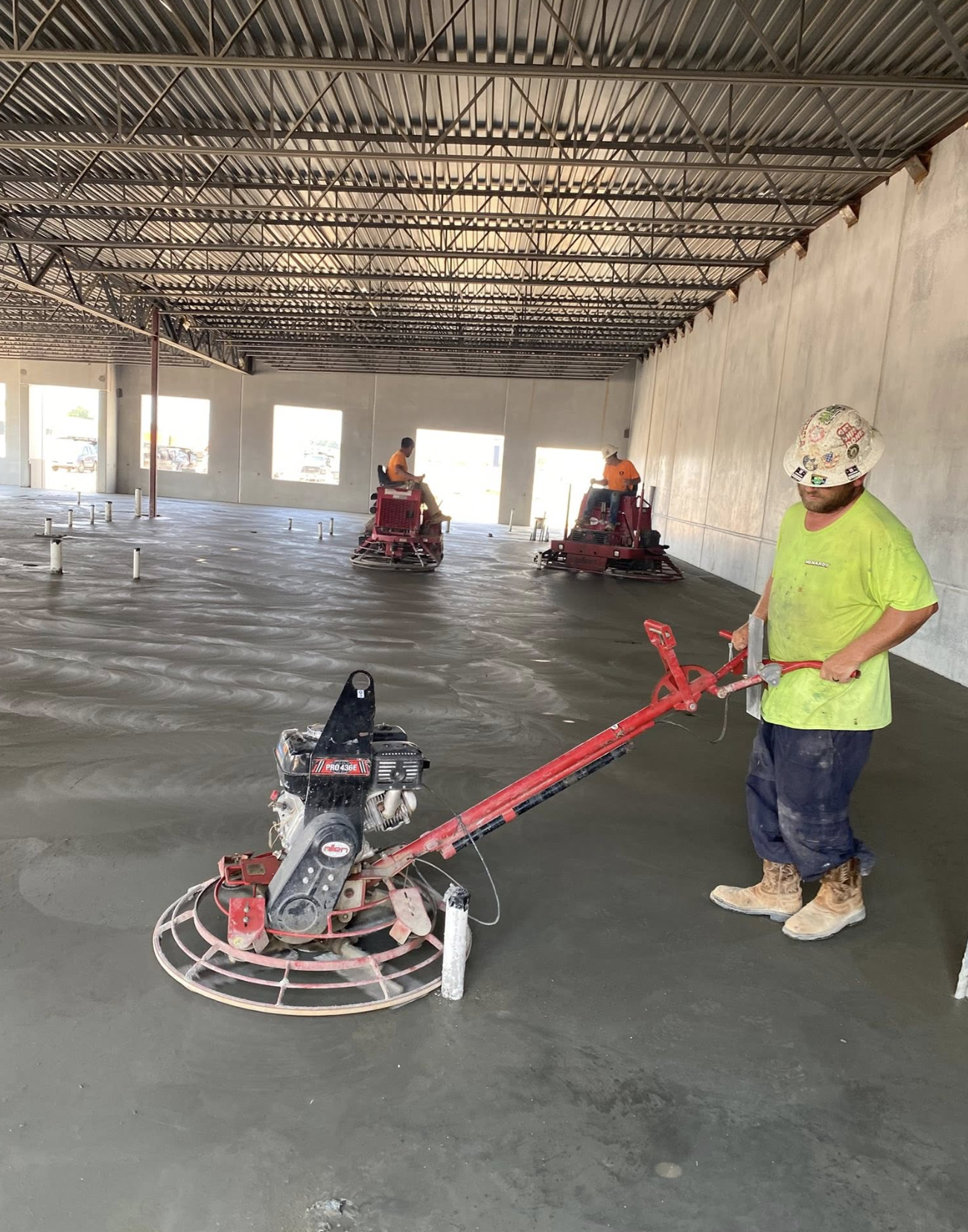
High temperatures accelerate finishing windows, requiring precise timing for:
- Screeding
- Floating
- Troweling
- Joint cutting
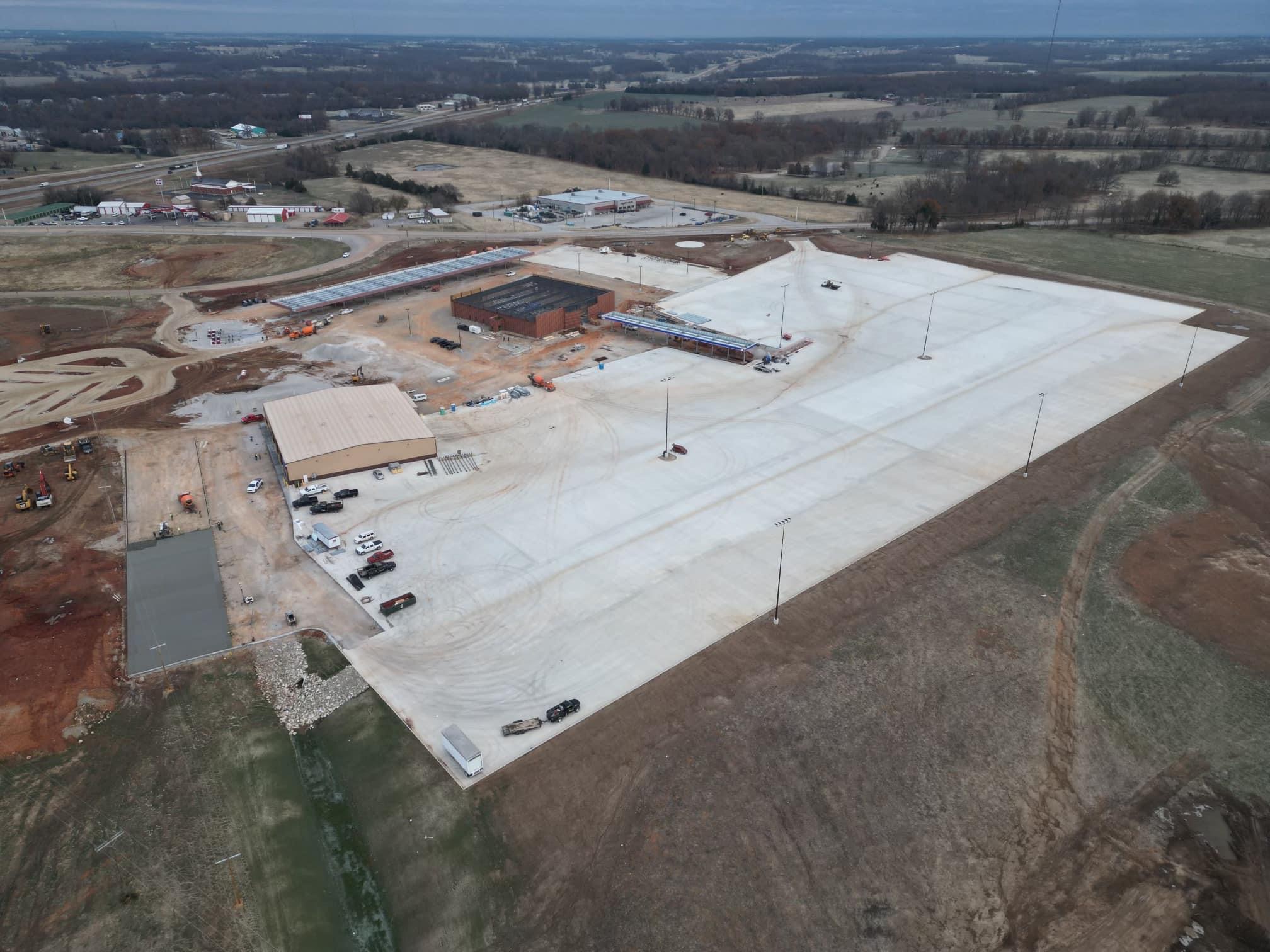
Large pours demand experienced crews and logistical coordination to maintain consistency across expansive areas.
11. Budget for Seasonal Demand
Spring and summer represent peak commercial concrete season in Springfield.
As demand increases:
- Scheduling fills quickly
- Material costs may fluctuate
- Labor demand rises
Early engagement with a commercial concrete contractor ensures better availability and cost predictability.
12. Consider Long-Term Durability in Ozarks Climate
Commercial concrete in Southwest Missouri must withstand:
- Hot summers
- Freeze-thaw cycles in winter
- Heavy rain events
- Clay soil movement
Planning for durability includes:
- Proper air entrainment
- High-quality reinforcement
- Drainage considerations
- Surface protection treatments
A well-planned summer pour contributes to performance through all seasons.
13. Communication Between Project Stakeholders
Successful commercial concrete work requires coordination between:
- Developers
- General contractors
- Structural engineers
- Ready-mix suppliers
- Inspectors
- On-site crews
As temperatures rise and schedules tighten, clear communication becomes even more essential.
Daily planning meetings and weather monitoring reduce risk and improve outcomes.
14. Contingency Planning for Storm Systems
Springfield’s storm season can bring:
- Sudden heavy rain
- High winds
- Severe weather warnings
Concrete pours require dry windows.
Project planning should include:
- Backup scheduling days
- Protective coverings
- Storm response protocols
Preparation prevents compromised pours.
15. Why Experience Matters in Warm-Weather Commercial Concrete
Commercial concrete projects involve high stakes:
- Structural integrity
- Tenant safety
- Long-term maintenance costs
- Operational efficiency
Warm-weather pours add another layer of complexity.
Working with an experienced Springfield-based contractor ensures familiarity with:
- Local climate patterns
- Soil conditions
- Municipal requirements
- Regional supplier networks
Knowledge of these variables directly impacts project success.
Final Thoughts: Build Smart as Temperatures Rise
Rising temperatures signal opportunity for commercial construction in Springfield, MO—but success depends on planning.
Key takeaways for warm-weather concrete projects:
- Schedule pours during cooler hours
- Control concrete temperature
- Implement proper curing methods
- Monitor wind and humidity
- Adjust mix designs when necessary
- Ensure strong subgrade preparation
- Prioritize worker safety
- Build flexibility into timelines
Commercial concrete is not just about placing material—it’s about engineering durability and performance into every slab and structure.
Partner With Meyer Construction in Springfield, MO
At Meyer Construction, we specialize in commercial concrete projects throughout Springfield and Southwest Missouri. Our team understands the technical demands of hot-weather concreting and brings the experience, equipment, and planning expertise required for high-performance results.
Whether you’re preparing for a new commercial development, industrial facility, retail expansion, or large-scale foundation project, we’re ready to help you plan strategically and execute with precision.
Contact Meyer Construction today to discuss your upcoming commercial concrete project—and ensure your warm-weather pour is built for long-term success.