What to Expect During a Commercial Concrete Project: Timeline, Phases, and Key Milestones
What to Expect During a Commercial Concrete Project: Timeline, Phases, and Key Milestones
For commercial property owners and developers, starting a concrete project can feel like a major undertaking. Whether it involves a new parking lot, foundation, or large scale flatwork, the process includes multiple phases that must be carefully coordinated.
Uncertainty about timelines, disruptions, and potential delays often creates hesitation. Understanding how a commercial concrete project progresses from start to finish helps set clear expectations and reduces risk.
In Springfield, Missouri, where weather conditions and soil characteristics can influence construction, working with experienced contractors such as Meyer Construction ensures projects are completed efficiently and with minimal surprises.
Pre-Construction Planning and Site Evaluation
Every successful concrete project begins long before any materials are poured. Pre-construction planning lays the foundation for everything that follows.
This phase typically includes:
- Site evaluation to assess soil conditions and grading needs
- Review of project scope and intended use
- Coordination with engineers, architects, or developers
- Budget alignment and scheduling considerations
During this stage, contractors identify potential challenges such as drainage concerns, elevation changes, or access limitations. Addressing these factors early helps prevent costly adjustments later in the project.
Permitting and Approvals
Before construction begins, necessary permits and approvals must be secured. Requirements vary depending on project size, location, and scope.
This process may involve:
- Local municipal permits
- Compliance with zoning regulations
- Coordination with utility providers
- Inspection approvals before and during construction
While permitting timelines can vary, experienced contractors help streamline the process by ensuring all documentation is completed correctly and submitted on time.
Site Preparation and Excavation
Once planning and approvals are complete, physical work begins with site preparation. This phase is critical because it directly impacts the performance and longevity of the finished concrete.
Key steps include:
- Clearing and grading the site
- Excavating to the required depth
- Removing unsuitable soil or debris
- Establishing proper elevation and slope for drainage
After excavation, the subbase is installed and compacted. This layer provides the structural support for the concrete and must be carefully prepared to prevent future settlement or movement.
In areas like Springfield, where clay-heavy soils are common, additional attention may be required to ensure stability.
Formwork and Reinforcement Installation
With the subbase in place, the next step is to define the shape and structure of the concrete.
This involves:
- Installing formwork to outline the project area
- Setting elevations and alignment
- Placing reinforcement such as rebar or fiber systems
Reinforcement is essential for controlling cracking and improving structural strength. The specific method used depends on the load requirements and intended use of the surface.
At this stage, contractors also verify that all measurements and layouts match project specifications before moving forward.
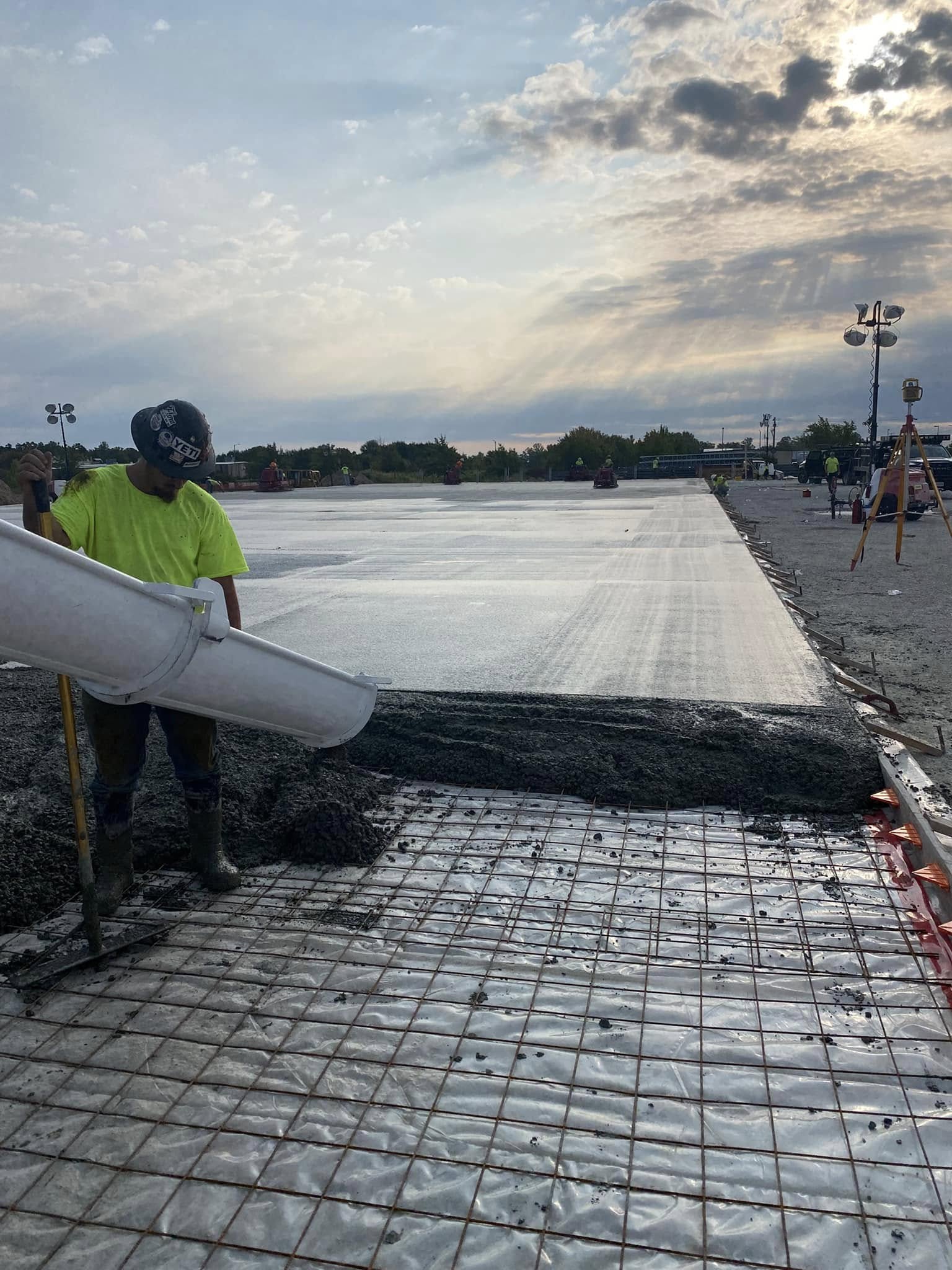
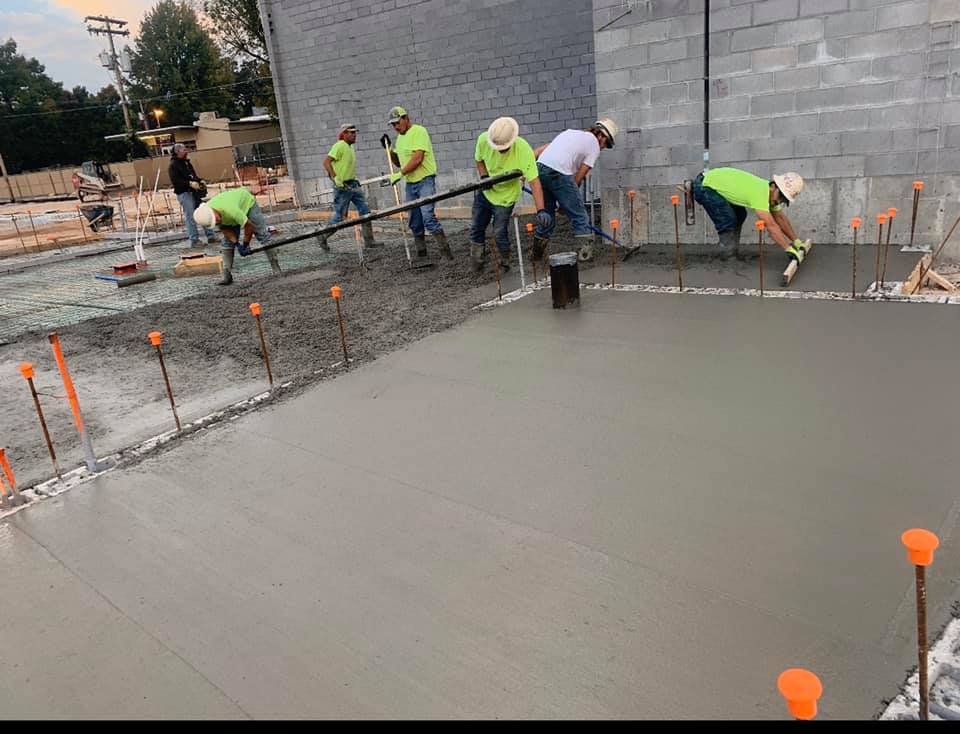
Concrete Pouring and Placement
The pouring phase is one of the most visible parts of the project, but it is also one of the most time sensitive.
During this stage:
- Concrete is delivered and placed within the prepared forms
- Crews spread and level the material
- Proper timing is maintained to ensure consistency
Environmental conditions play a significant role. Temperature, humidity, and wind can all affect how concrete behaves during placement.
Experienced contractors monitor these conditions closely to ensure proper installation and avoid issues that could impact long term performance.
Finishing and Surface Treatment
After placement, the concrete is finished to achieve the desired texture and appearance. This step also contributes to safety and usability.
Common finishing processes include:
- Smoothing and leveling the surface
- Adding texture for traction where needed
- Creating control joints to manage cracking
- Finalizing edges and transitions
Control joints are particularly important, as they help guide natural cracking and prevent random surface fractures.
Curing and Strength Development
Once the concrete is finished, it must cure properly to reach its full strength. Curing is not simply a waiting period. It is an active process that requires careful management.
Key aspects of curing include:
- Maintaining proper moisture levels
- Protecting the surface from extreme temperatures
- Allowing sufficient time for strength development
Concrete continues to gain strength over time, but the initial curing period is critical. Rushing this phase can lead to long term durability issues.
Typical Project Timeline
While every project is different, most commercial concrete projects follow a general timeline.
A simplified timeline may look like:
- Pre-construction planning and permitting: several days to several weeks
- Site preparation and excavation: a few days to over a week depending on size
- Formwork and reinforcement: several days
- Pouring and finishing: one to several days
- Initial curing: several days before light use
- Full strength development: several weeks
Larger or more complex projects may extend beyond these ranges, particularly if multiple phases are required.
Common Delays and How They Are Managed
Delays can occur in any construction project, but experienced contractors plan for and manage these challenges effectively.
Common causes of delays include:
- Weather conditions such as rain or extreme temperatures
- Unexpected soil or site conditions
- Changes in project scope
- Scheduling conflicts with other trades
To minimize disruption, contractors may:
- Adjust schedules based on weather forecasts
- Phase work to maintain access to key areas
- Communicate regularly with property owners and managers
- Resolve issues quickly to keep the project moving forward
Clear communication is essential for maintaining expectations and avoiding unnecessary frustration.
When the Space Is Ready for Use
One of the most common questions property owners ask is when the area can be used after installation.
Usage timelines typically depend on the type of traffic:
- Pedestrian access may be allowed within a few days
- Light vehicle traffic is usually permitted after several days to a week
- Heavy vehicle traffic may require additional curing time
Allowing adequate curing time is essential for long term performance. Using the surface too soon can compromise strength and lead to premature damage.
Minimizing Disruption to Business Operations
For commercial properties, maintaining operations during construction is a top priority. With proper planning, disruption can be significantly reduced.
Strategies include:
- Phased construction to keep portions of the site accessible
- Scheduling work during off peak hours when possible
- Providing clear signage and temporary access routes
- Coordinating closely with tenants and staff
Experienced contractors understand the importance of balancing construction efficiency with operational needs.
How Meyer Construction Keeps Projects on Track
Successful commercial concrete projects require coordination, planning, and attention to detail at every stage.
Meyer Construction focuses on:
- Clear communication from start to finish
- Accurate scheduling and timeline management
- Proactive problem solving
- Quality control at each phase of construction
By managing each step carefully, they help ensure that projects are completed on time and meet performance expectations.
Final Thoughts
A commercial concrete project involves more than just pouring material. It is a structured process that requires careful planning, coordination, and execution.
Understanding each phase, from pre-construction through curing, allows property owners and developers to approach projects with confidence.
In Springfield, Missouri, where environmental factors can influence construction timelines, working with experienced contractors such as Meyer Construction helps ensure that projects are completed efficiently and built to last.
With the right planning and expectations, commercial concrete projects can be completed smoothly while supporting long term property performance and value.