Why Concrete Joint Planning Matters for Commercial Projects in Southwest Missouri
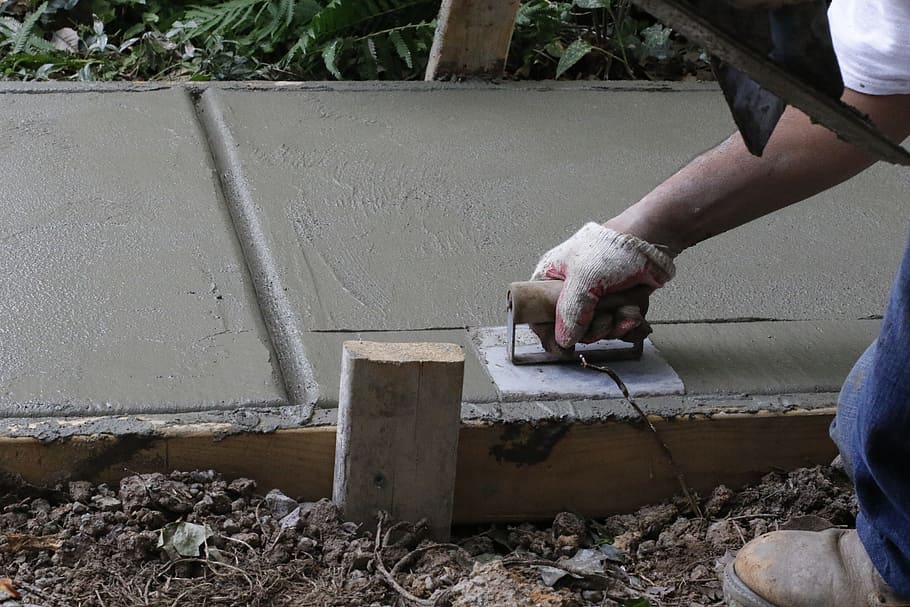
Why Concrete Joint Planning Matters for Commercial Projects in Southwest Missouri
Concrete is strong and durable, but it still moves.
Drying shrinkage, temperature changes, moisture, heavy loads, and normal building movement all place stress on a slab after it is poured. If that movement is not anticipated, concrete can crack in unwanted locations. That is why joint planning is part of good concrete design from the start.
For commercial property owners, developers, and general contractors in Springfield and throughout Southwest Missouri, joint layout can affect appearance, performance, maintenance, and durability. Warehouses, parking lots, loading docks, and industrial floors all have different demands, but the principle is the same. Concrete needs planned locations where movement can occur in a controlled way.
Concrete Moves More Than It Looks Like
Once concrete hardens, it may appear rigid. In reality, it continues responding to its environment.
As concrete cures and loses moisture, it shrinks. Temperature changes cause expansion and contraction. Subgrade conditions, structural loading, and surrounding building elements can add stress.
This movement is normal. The challenge is managing it.
A large uninterrupted slab has fewer places to relieve stress. When stress exceeds what concrete can resist, a crack may form. Properly designed joints create intentional locations for movement.
The goal is not to prevent every crack. It is to influence where movement occurs, protect critical areas, and reduce random cracking that can affect appearance or performance.
What Is a Concrete Joint?
A concrete joint is a planned separation, groove, or weakened plane that allows concrete to shrink, move, or transition in a controlled location. Commercial projects may use several types.
Control Joints
Control joints, also called contraction joints, create a deliberate weak point in the slab. As concrete shrinks, the joint encourages cracking to occur along that line instead of randomly across the surface.
These joints may be formed during placement or created with saw cuts. Spacing, depth, timing, and layout all matter.
Isolation Joints
Isolation joints separate a slab from fixed structural elements such as columns, walls, or equipment foundations. This allows the slab and adjoining element to move independently, reducing stress caused by restraint.
Construction Joints
Construction joints mark where one concrete placement ends and another begins. They can affect sequencing, load transfer, reinforcement, and slab continuity, so they should be coordinated with the overall slab design.
Expansion Joints
True expansion joints accommodate movement between sections of concrete or adjoining structural components. They are not required in every slab, so their use should follow project drawings and specifications.
Why Random Cracks Matter
A crack does not automatically mean a slab has failed, but random cracking can still create problems.
Appearance is one concern. A prominent crack in a showroom, retail entrance, polished floor, or sidewalk can make quality work look unfinished.
Cracks can also become maintenance points. Water, traffic, freeze-thaw cycles, and impact may cause edges to deteriorate over time.
In warehouses and industrial spaces, surface irregularities can affect forklifts, pallet jacks, and other equipment. Thoughtful joint planning helps make slab movement more predictable.
Joint Layout Should Match How the Property Will Be Used
A warehouse floor does not experience the same conditions as a retail sidewalk. A loading dock is different from an office entrance. Joint planning should reflect how the property will actually function.
Warehouse floors may need to account for forklift routes, rack layouts, equipment bases, door openings, and concentrated loads. Parking lots may require joint patterns coordinated around islands, curbs, drains, light poles, and changes in pavement geometry. Loading areas may need extra attention to truck traffic, turning movements, impact, and slab transitions.
Because joints create lines in the finished surface, poor placement can lead to unnecessary wear. Good planning asks not only, "Where can we cut the slab?" but also, "How will this facility be used?"
Corners and Irregular Shapes Need Extra Attention
Concrete performs best with simple geometry. Reentrant corners, narrow sections, drains, columns, utility penetrations, and abrupt changes in width can create stress concentration points.
For example, an L-shaped slab may crack outward from an inside corner as it shrinks.
A well-planned layout identifies these areas before placement. Joint lines can often be coordinated with corners, openings, columns, or changes in geometry so movement occurs more predictably.
Saw-Cut Timing and Depth Matter
Knowing where a control joint belongs is only part of the job. Timing matters too.
Saw cutting generally needs to happen after the concrete is firm enough to avoid excessive edge damage but before shrinkage stresses cause uncontrolled cracking. The timing can vary based on mix design, temperature, wind, humidity, slab thickness, curing conditions, and placement time.
Waiting too long may allow random cracks to form first. Cutting too early may damage the surface.
Depth matters for the same reason. A control joint creates a weakened plane where the slab is more likely to crack. If the joint is too shallow, the concrete may crack somewhere else.
Project specifications commonly establish saw-cut depth and joint dimensions. A visible line does not necessarily mean the joint was installed correctly.
Reinforcement Does Not Replace Joints
Steel reinforcement, welded wire reinforcement, and fibers can improve concrete performance, but they do not eliminate drying shrinkage.
Reinforcement and joints serve different purposes. Reinforcement may help hold concrete together, distribute stresses, or meet structural requirements. Joints help control where movement occurs.
Strong concrete construction uses a complete system in which subgrade preparation, reinforcement, mix design, placement, curing, and jointing support one another.
Southwest Missouri Weather Adds Another Layer
Commercial concrete in Southwest Missouri faces hot summers, cold winter periods, humidity, rain, and repeated seasonal changes.
Temperature fluctuations cause expansion and contraction. Moisture can affect subgrade conditions, and exterior slabs may experience freeze-thaw cycles.
These conditions make planning especially important for parking lots, sidewalks, loading areas, and other exposed concrete.
Jointing is only one part of building for local conditions. Drainage, base preparation, curing, reinforcement, and grading also matter. Still, a thoughtful joint layout gives concrete a better way to respond to long-term stress.
Local experience is valuable because commercial concrete is built on real sites with changing weather, variable soils, access limitations, and project deadlines.
Joint Planning Should Happen Before the Pour
The best time to solve a joint problem is before concrete is placed.
Pre-pour coordination allows the project team to review slab layout, construction sequencing, reinforcement, traffic patterns, floor finishes, drains, equipment bases, transitions, and connections to existing concrete.
This is especially important on commercial jobs where multiple trades share the same space. A relocated drain, penetration, doorway, or equipment change can affect the joint layout. Early communication reduces surprises and potential conflicts.
Joints Affect Appearance and Maintenance
Joint planning is technical, but it also affects how finished concrete looks.
On commercial entrances, sidewalks, polished floors, and decorative surfaces, joint lines become part of the design. Clean patterns help the finished work look organized and professional.
Some facilities also use joint fillers or sealants to protect edges, limit debris, reduce water intrusion, or support traffic across joints. These materials may require inspection or replacement over time.
High-traffic industrial spaces deserve particular attention because repeated hard-wheel traffic can damage deteriorating joint edges.
Long-term maintenance starts with a well-planned installation.
The Value of an Experienced Commercial Concrete Partner
Commercial concrete projects require coordination with schedules, trades, inspections, structural requirements, logistics, safety, and long-term facility needs.
An experienced concrete contractor understands how those pieces connect.
At Meyer Construction, the goal is not simply to place concrete. It is to help create commercial concrete systems planned around the needs of the project. That includes what happens below the slab, during placement, and after finishing.
Joint planning shows why experience matters. Joints may represent only a small portion of the visible surface, but their location and execution can influence how thousands of square feet of concrete perform.
Build Movement Into the Plan
Concrete is strong, but strength alone does not create a successful commercial slab.
Good concrete construction anticipates movement. Control joints, isolation joints, construction joints, and other planned details give concrete better ways to respond to shrinkage, temperature changes, structural conditions, and daily use.
For commercial projects in Springfield and throughout Southwest Missouri, joint planning should be considered alongside site preparation, drainage, reinforcement, mix design, curing, and load requirements.
When joints are planned early, coordinated with the building, and installed correctly, they can reduce random cracking and support a cleaner, more durable finished project.
Whether you are planning a warehouse, retail development, industrial facility, parking area, or commercial expansion, details that seem small on the drawings can make a noticeable difference in the field.
Meyer Construction understands that durable concrete starts with careful planning from the ground up. An experienced commercial concrete team can help ensure the slab is built for years of use.
Summary
Concrete joint planning helps commercial slabs manage shrinkage, temperature changes, structural movement, and daily use. For projects in Springfield and Southwest Missouri, thoughtful joint layout, timing, depth, reinforcement coordination, and pre-pour planning can reduce random cracking, improve appearance, and support long-term performance.